.jpg)
Smeaton’s Spirit Academy 4
The series continues with an article focusing on The Bristol Method of gin distillation.
The Bristol Method is a way of making Gin in which the botanicals are distilled individually rather than being treated as a single botanical charge.
The resulting distillates are then blended to create the finished Gin. While a deceptively simple idea, its significance lies in what it allows the distiller to do: treat each botanical according to its own characteristics, rather than asking one process to accommodate every ingredient at once.
But why did this particular approach develop in Bristol? We cannot say for certain. While the surviving records explain the method and ingredients, our research has not provided a simple explanation of how the method originated. But Bristol itself offers a clue that led us to a hypothesis. Perhaps the Bristol Method was shaped by Bristol?
For centuries, Bristol was one of Britain's great trading ports. Goods arrived from around the world, including many of the ingredients used by distillers, merchants and food producers. Some botanicals could be imported in dried form and stored for long periods. Others, particularly fresh fruits, were seasonal and perishable. They would not necessarily have arrived together. A ship carrying citrus might arrive at a different time from a consignment of spices. Fresh fruit might be available for only a limited period, while dried roots, seeds and bark could remain in storage.
For a distiller working with these materials, there was a practical problem to solve. How do you make a consistent Gin from ingredients that are not necessarily available at the same time, and which do not necessarily respond to distillation in the same way? One plausible answer is to distil them individually. This is what the records suggest, and it's what we believe happened.
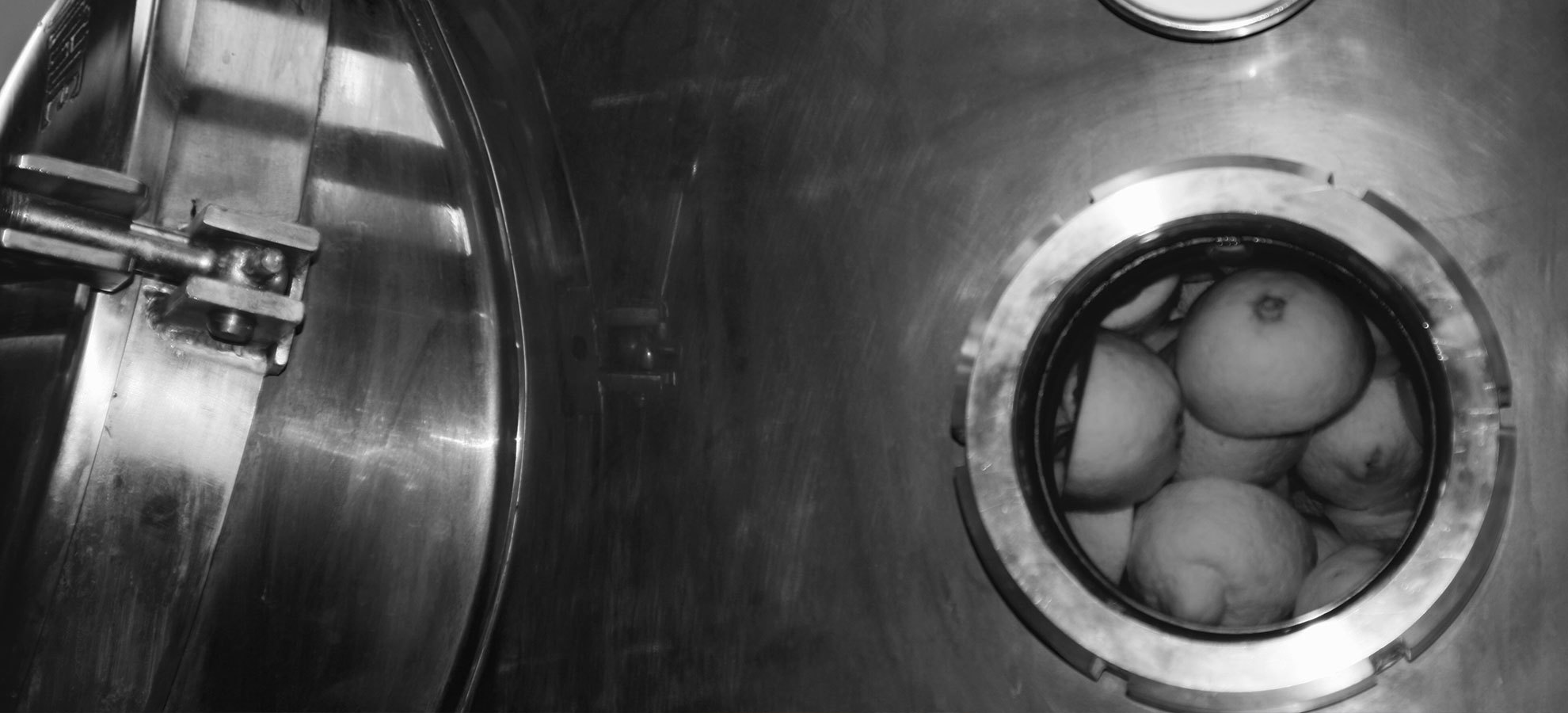
Rather than waiting for every botanical to be assembled and putting them all through the still together, each ingredient could be distilled when it was available and its resulting spirit retained for subsequent blending. Individual distillation would also offer a practical way of capturing and preserving the character of fresh botanical material as it became available. Distillation transfers its volatile aromatic character into an alcoholic distillate that can be stored, allowing the botanical itself to be used when it is at its best rather than requiring the distiller to keep the fresh ingredient indefinitely.
We should be careful about the distinction between evidence and interpretation. We don’t have a surviving document telling us that Bristol distillers adopted individual botanical distillation specifically because botanicals arrived through the port at different times. We can’t prove that the trading pattern of the city caused the method to develop. But the connection is plausible. And it gives a distinctive way of understanding the Bristol Method: perhaps it was shaped not just by the still, but by the city around it.
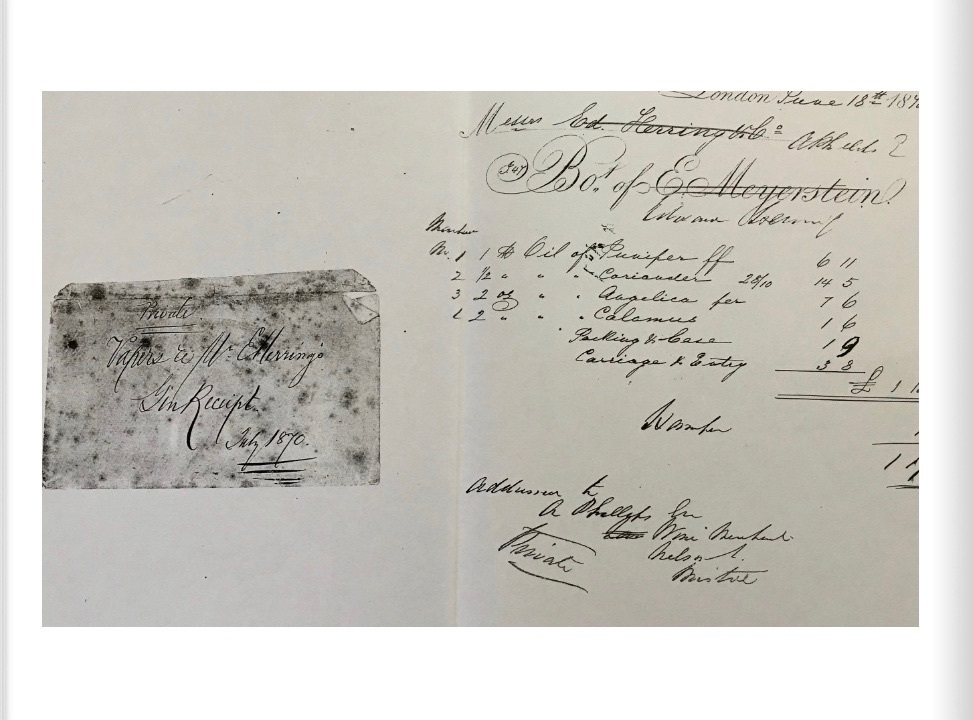
Surviving records do show that Bristol had a distinctive gin-making tradition. An 1869 book by Loftus, The Mixing & Reducing Book, describes Bristol Gin alongside gins associated with Liverpool and Plymouth, suggesting that regional differences in gin-making and character were recognised at the time. More importantly, a handwritten recipe dating from the 1870s, discovered in the Bristol Archives on Smeaton Road, provides evidence of the method. The historical record does not tell us every step in the thinking that produced that recipe. But it gives us something more valuable: a method that can be examined, interpreted and recreated.
The principle is straightforward - different botanicals behave differently. Juniper, citrus peel, roots, seeds and spices contain different aromatic compounds and respond differently to alcohol, water, heat and time. A fresh citrus fruit does not present the same distillation challenge as a dense root. A spice can behave differently again.
If all the botanicals are treated together, the distiller has to establish one process for the complete botanical charge. That process can produce excellent Gin. There is nothing inherently wrong with combined botanical distillation. But it obviously, necessarily, involves compromise. One botanical may benefit from longer maceration while another requires less. One may respond well to greater heat while another has more delicate aromatic character. The ideal point at which to make the distillation cut may not be identical for every ingredient.
Individual botanical distillation changes the equation. Each botanical can be approached on its own terms. Maceration, temperature, distillation rate and cuts can be considered according to the ingredient being distilled. The resulting distillates can then be assessed and combined and rested.
The advantage is not simply that there are more distillations. It is that the distiller has more choices. This is an important distinction because production complexity should not be confused with quality. A combined botanical distillation can be beautifully made. Vapour infusion can produce an elegant Gin. Compound Gin can be made with considerable skill.
The Bristol Method is not better because it involves more work. Its potential advantage is control. The real question is what the distiller does with the control and the choices available. The Bristol Method provides a particularly precise set of choices. Each botanical can be considered independently, and its distillate can become one component in the final composition.
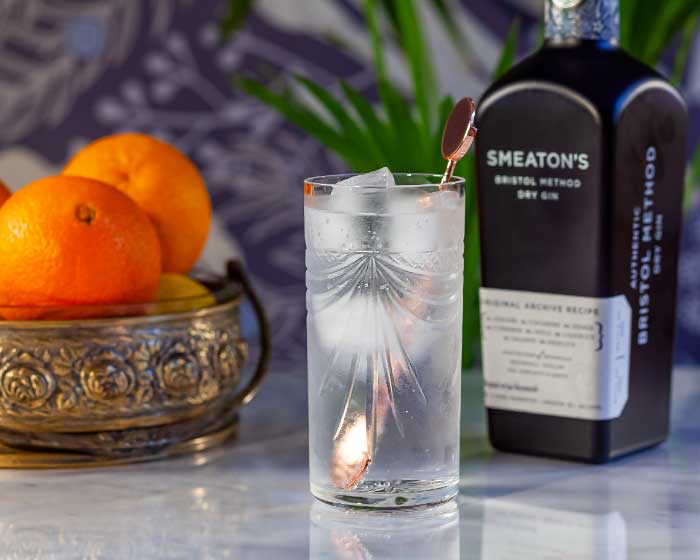
Smeaton’s recreates the handwritten 1870s recipe found in the Bristol Archives, using fresh botanicals individually distilled in traditional copper pot stills according to their season. The individual distillates are then blended and rested for three months to create the finished gin.
And the finished gin is where the Bristol Method has to justify itself. A production method can be historically interesting without producing a better drink. Individual distillation can provide greater control, but control is only valuable if it is used well. Ultimately, the test is the Gin itself. Smeaton’s has subsequently received repeated recognition from a number of international spirits competitions, including Gold and Trophy awards across several years. These awards do not prove that the Bristol Method is inherently superior, nor can any competition determine what an individual drinker will prefer. They do, however, provide independent evidence that the Gin produced through this method has repeatedly been judged to a hold to a very high standard.
Perhaps, then, the most interesting thing about the Bristol Method is not simply that it is different. Rather it is the rationale for why it might have developed in Bristol in the first place.
.jpg)