
Smeaton’s Spirit Academy 3
In this article, the third in the academy series, we turn our attention to the various different methods of making gin.
There is no single way to make Gin, though the basic principle is straightforward enough: allcohol is combined with juniper and other botanicals to create a spirit whose character comes from the ingredients themselves, and from the way those ingredients are treated.
But there are several different routes from the raw botanical to the finished Gin. Some botanicals may be steeped directly in alcohol. Others may be exposed to alcohol vapour. The botanicals may be distilled together or separated. There are also Gins in which flavour is added without a further distillation. These are not simply different versions of the same process. Each method gives the distiller different possibilities, and imposes different limitations.
Understanding those differences is useful because production terms can sound more meaningful than they really are. Words such as distilled, vapour infused, small batch and handcrafted tell us something about how a Gin was made, but they do little to tell us whether the result will be better. The more useful question is what the method allows the distiller to achieve, and whether that can be detected in the glass.
One of the simplest ways to make Gin is to combine botanicals with alcohol and allow their flavours to be extracted directly. This is often described as compound Gin. The principle is similar to making a botanical infusion. Alcohol is an effective solvent, and over time it can extract many of the flavour and aroma compounds present in plants, spices, seeds, roots and fruits. Once the desired flavour has been achieved, the botanical material can be removed and the spirit adjusted and bottled. There is nothing inherently wrong with this approach. It can produce characterful spirits, and it gives the producer considerable freedom over the ingredients and their proportions. It is also a relatively direct way of creating flavour. But extraction is not entirely selective. Alcohol does not simply take the compounds the distiller wants and leave everything else behind. The resulting spirit reflects not only the botanical ingredients but also the conditions under which they were extracted, including time, temperature, alcohol strength and the physical nature of the botanical material.
Distillation introduces another possibility. Instead of simply extracting flavour into alcohol, the distiller can use heat to separate and concentrate volatile compounds and allow them to pass into a new spirit. When botanicals are distilled with alcohol, the process is therefore more than extraction. Some compounds are carried into the vapour and subsequently condensed, while others remain behind. The distiller is influencing which parts of the botanical character make their way into the finished spirit. This gives considerably more control over the final profile. The traditional copper pot still is particularly well suited to this kind of work. Alcohol and water are heated together, producing vapour which rises through the still before being condensed back into liquid. When botanicals are involved, volatile compounds from those botanicals can travel with the vapour. The botanicals can be treated in different ways. They may be placed directly into the spirit so that they macerate before and during distillation. They may be held above the spirit in a basket so that alcohol vapour passes through them. Or a combination of approaches can be used. Maceration and vapour infusion therefore represent two different ways of bringing alcohol and botanicals together. Maceration gives the alcohol direct contact with the botanical material. This can encourage substantial extraction and can produce a relatively deep and rounded expression of ingredients such as roots, seeds and spices. Vapour infusion is different. The botanicals are exposed primarily to alcohol vapour rather than being immersed in the liquid. This can be particularly useful when the distiller wants to preserve delicate or highly aromatic characteristics. Neither method is automatically better. A robust root may benefit from prolonged contact with alcohol. A delicate flower or fresh citrus peel may respond very differently. The choice depends on the botanical and on the character the distiller is trying to achieve.
The development of vapour infusion is itself part of Gin's history. In nineteenth-century England, the Dakin family developed a form of vapour infusion at their distillery in Warrington, an industrial region between Liverpool and Manchester. The approach used a separate chamber or basket in which botanicals could be exposed to the rising alcohol vapour. This became associated with the Carter-Head still, an adaptation of the pot still which incorporates a botanical chamber into the path of the vapour. The importance of the Carter-Head is not simply the shape of the still. It represents a different relationship between the spirit and the botanicals. In a conventional pot still, botanicals can be immersed in the spirit and heated with it. In a Carter- Head, the spirit is heated separately and the botanicals are encountered principally by the rising vapour. The distinction can influence the character of the resulting spirit. Vapour infusion can favour a lighter and more delicate expression of aromatic botanicals, while direct maceration and distillation can produce a fuller and more substantial extraction. Again, neither is inherently superior. They are different tools for solving different problems.
There is another important distinction. Botanicals can be distilled together, or they can be distilled separately. When botanicals are distilled together, the distiller is creating a single botanical distillate from the whole recipe. Juniper, citrus, spices, roots and other ingredients interact during the process. This can be highly effective. The ingredients do not necessarily emerge as separate, identifiable flavours. Instead, their compounds combine to produce a unified profile. That integration can be part of the appeal of Gin. A well-made spirit can taste greater than the sum of its ingredients. Juniper provides the essential structure, while citrus, spice, floral and earthy notes support and modify it. But combined distillation also creates a constraint. Once the botanicals are in the still together, the distiller has less ability to adjust the contribution of each individual ingredient after distillation. The behaviour of one botanical can also influence the way another is expressed. This is not necessarily a problem. In fact, it may be exactly what the distiller wants. But it means that the recipe and the process are closely connected. Changing the amount of one botanical, its preparation, the time it spends in contact with the spirit, or the conditions of distillation can affect the behaviour of the whole composition.
Individual botanical distillation takes a different approach. Instead of putting the entire botanical recipe into the still at once, individual botanicals, or selected groups of botanicals, can be distilled separately. The resulting distillates can then be blended to create the final Gin. This separates two stages which are otherwise closely connected: extraction and composition. The distiller can concentrate on obtaining the desired expression from each botanical before deciding how much of it should contribute to the finished spirit. That can provide greater control. A citrus botanical can be distilled when fresh in season, to emphasise its fresh aromatic qualities. A spice can be treated differently to avoid allowing its heavier characteristics to dominate. A root can be handled according to its own extraction and distillation behaviour. The resulting distillates can then be combined in precise proportions. This approach does not necessarily produce a better Gin. It produces a different set of possibilities. That distinction matters. It is tempting to assume that greater control must result in greater quality. It does not. A highly controlled process can still produce a poorly balanced spirit. And a relatively simple process can produce a remarkably elegant spirit. The purpose of a production method is not to demonstrate technical sophistication. It is to create the desired character in the glass.
There is also an important difference between the method used to extract botanical character and the category under which a Gin is sold. Terms such as Gin, Dry Gin, Distilled Gin and London Gin describe defined categories with particular requirements. They should not be treated simply as descriptions of how much care has gone into making a spirit. The same principle applies to words such as distilled and vapour infused. They describe aspects of production, but they do not tell us whether the botanicals were chosen well, whether the process was skilfully controlled, or whether the resulting Gin is balanced.
Nor does a production description such as small batch or handcrafted provide a guarantee of quality. So what actually changes when the method changes?
One answer is extraction. Different botanicals contain different groups of compounds, and those compounds behave differently in the presence of alcohol, water, heat and time. The method therefore influences which characteristics are extracted and how strongly they appear.
Another answer is concentration. Distillation can concentrate desirable volatile compounds while leaving less volatile material behind. It can therefore change not simply how much botanical character is present, but the nature of that character.
A third is integration. When botanicals are distilled together, their compounds interact within the same process. When they are distilled separately, the distiller has the opportunity to create individual components and then decide how those components should work together. This can make individual botanical distillation particularly interesting when the aim is precision. But precision is only useful if it serves the flavour.
The fourth consideration is balance. Gin is not simply a collection of botanical flavours. It is a composition. Juniper needs to remain recognisable. Citrus may provide lift. Coriander can contribute spice and citrus-like notes. Roots can provide structure. Cardamom, pepper and other spices can add warmth or complexity. Floral botanicals can introduce perfume, while seeds and roots can add depth. The distiller's task is to make those elements work together.
That is why a botanical list, however impressive, tells us surprisingly little about the quality of a Gin. Two Gins can contain many of the same ingredients and taste completely different. They may use different proportions, different preparations, different extraction times, different stills and different distillation methods. Even apparently small decisions can matter. Fresh citrus peel behaves differently from dried peel. Whole botanicals behave differently from finely processed material. A spice can be subtle at one concentration and dominant at another. Heat can encourage the extraction of some compounds while altering others.
The finished Gin is therefore the result of a chain of decisions rather than a simple recipe. This is also why descriptions of Gin production can sometimes become misleading. A technique can be presented as though it were inherently superior when, in reality, it is simply different. Individual botanical distillation is a good example. It can offer the distiller an unusually high degree of control over individual components. That can be valuable. But the existence of that control does not guarantee that it has been used well.
The same is true of traditional pot distillation. The equipment may be traditional, but tradition alone does not create quality. Nor does modern technology necessarily produce a better result. A pot still, a vapour basket, a Carter-Head or a combination of techniques can all be used skilfully. The important thing is the relationship between the method and the intended character of the Gin. This gives us a more useful way of thinking about Gin production. Instead of asking which method is best, it is better to ask what each method makes possible. Compound production can provide direct and flexible extraction. Maceration and redistillation can create depth and substantial botanical character. Vapour infusion can be useful when delicate aromatic expression is important. Combined botanical distillation can create an integrated composition in which the ingredients influence one another during the process. Individual botanical distillation can give the distiller greater control over the expression and subsequent proportion of individual components. These are different tools. A skilled distiller chooses between them according to the ingredients and the character they want in the finished spirit.
This also changes the way we should read a Gin label.
If a Gin tells us that it uses ten, fifteen or twenty botanicals, the useful question is not whether more is better. It is what those botanicals contribute.
If it tells us that the Gin is distilled, the useful question is what was distilled and how. If it refers to vapour infusion, we can ask which botanicals were infused in this way and why. If it describes individual botanical distillation, we can ask what advantage that process is intended to provide.
And if a Gin is considerably more expensive than another, the production method may help explain the cost, but it does not by itself justify the price.
Ultimately, Gin is judged in the glass. The aroma should tell us something about the ingredients and the way they have been treated. The palate should have structure and balance. Juniper should remain central, while the supporting botanicals should contribute rather than simply compete for attention. There should be a sense that the individual elements belong together. That may sound obvious, but it is an important distinction between understanding how a Gin is made and understanding whether it is well made.
The production method is part of the explanation. It is not the conclusion. This is where the story of Gin becomes particularly interesting. Once we understand that different botanicals behave differently, and that different methods give the distiller different degrees of control, we can begin to understand why some producers choose to move away from a single botanical distillation and towards a more bespoke approach.
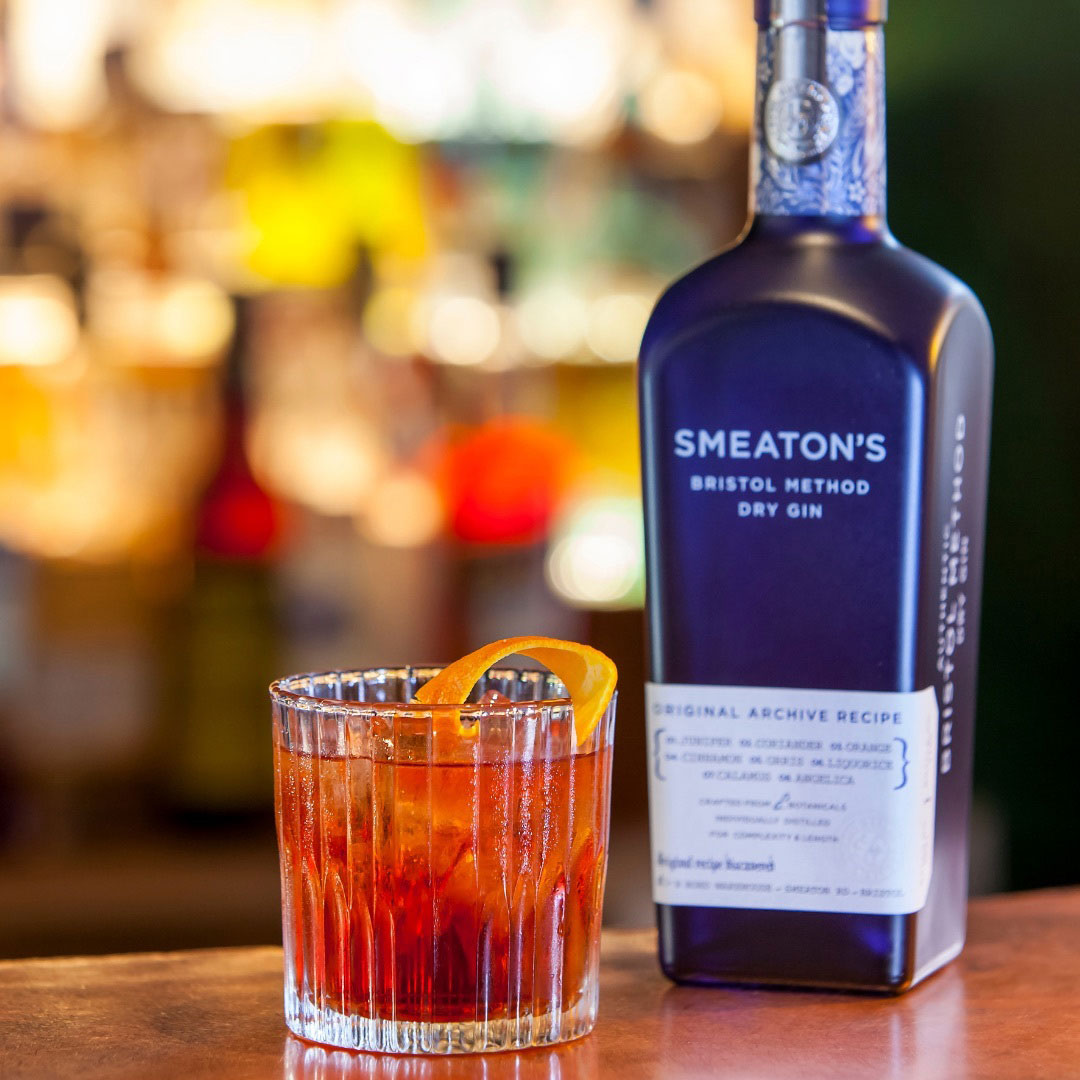
One such approach is the Bristol Method. The principle is simple to describe, but its implications are more interesting. Instead of treating the botanical recipe as one entity, the method allows individual botanicals to be considered and distilled according to their own characteristics before being brought together as a finished composition. That raises an important question. What happens when a Gin is designed botanical by botanical rather than recipe by recipe?
The answer takes us beyond the general question of how Gin is made and into the particular philosophy behind the Bristol Method...